


Last updated: November 1, 2026
Flossing with braces means guiding floss beneath the archwire, gently cleaning the sides of both teeth and the gumline, then removing the floss without pulling on the wire. Repeat at each gap; a floss threader can make the process easier, but it is not the only option. At Good Tooth Dental Care, we offer teeth straightening care in Bellevue, Washington.
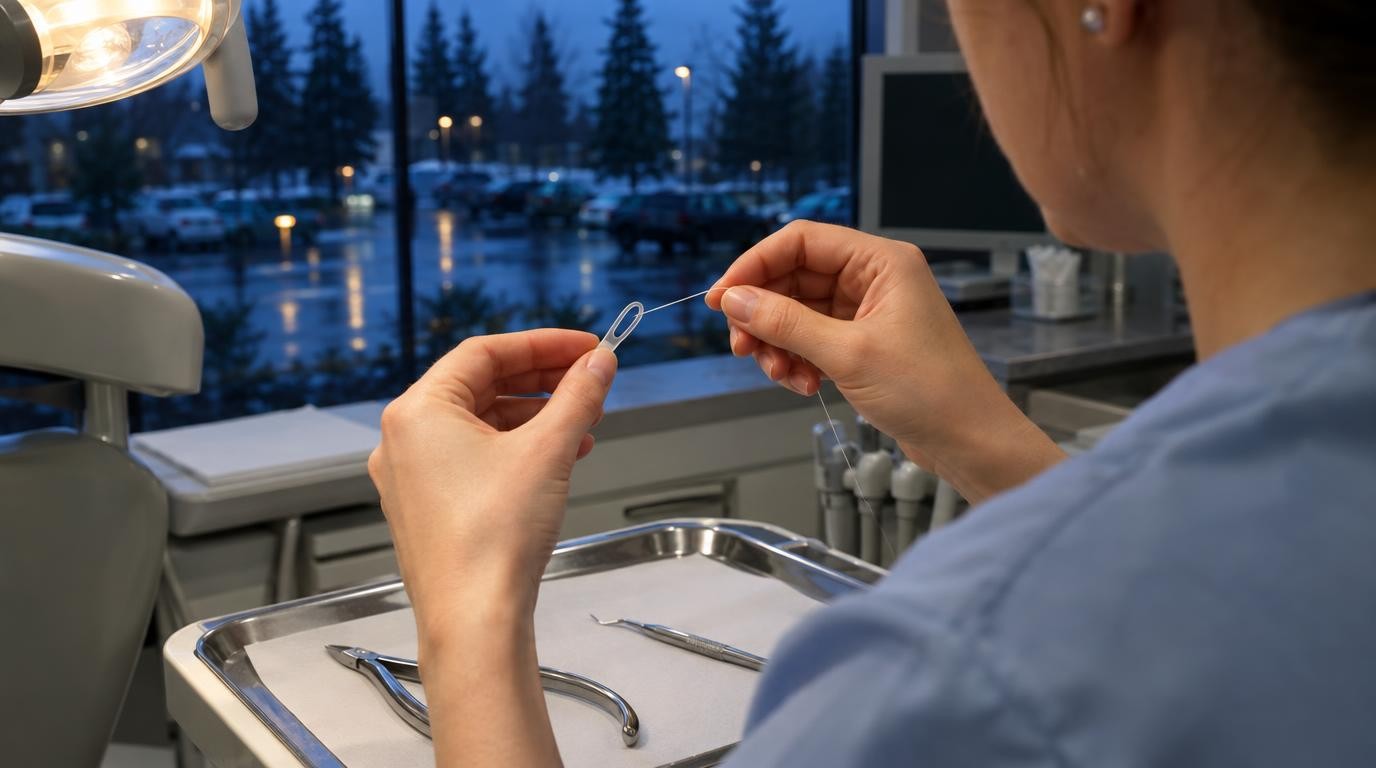
How do I floss with braces using a floss threader?
Start by threading floss through the threader’s loop and guiding it beneath the archwire to a tooth gap, as Johns Hopkins Medicine describes. The American Dental Association’s flossing guidance suggests using about 18 inches of floss and avoiding a snap into the gums.
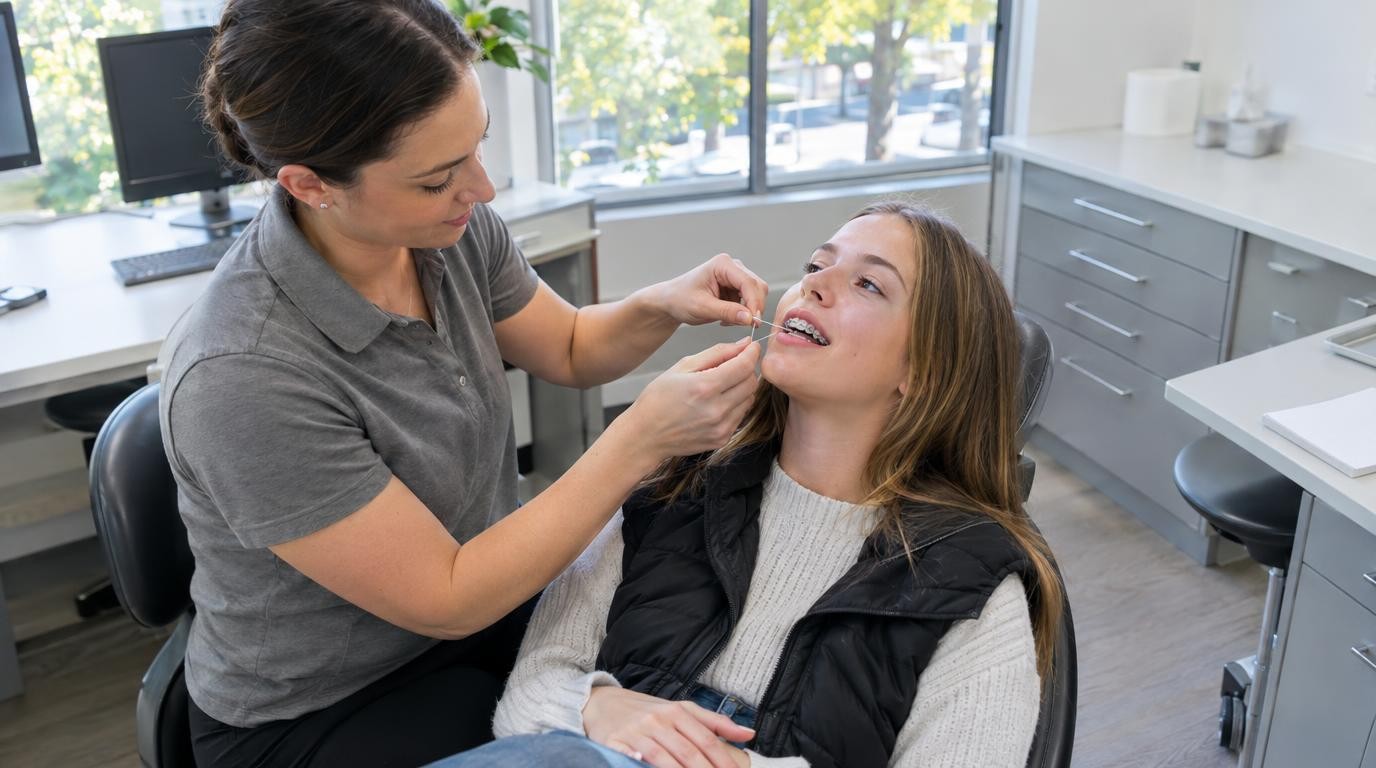
How do I pass floss beneath the archwire?
Follow these steps for each gap:
- Pull a length of waxed floss through the threader’s loop, leaving enough floss to hold securely.
- Guide the threader tip beneath the archwire near the gap you want to clean. Pull it through until the floss, rather than the threader, sits below the wire.
- Hold the floss taut between your fingers before guiding it between the teeth.
An article on Cleveland Clinic’s site notes that waxed floss may be less likely to catch or tear on braces. If a threader catches on a bracket, stop and reposition it rather than forcing it through.
How do I clean between teeth without tugging on the wire?
Slide the floss between the teeth with a gentle rubbing motion. Curve the floss into a C shape around one tooth, gently slide it into the space between the gum and tooth, and move it up and down along the tooth’s side; repeat on the neighboring tooth. Ease the floss back out between the teeth; never use the archwire as a handle or pull floss against it. Reposition the floss beneath the wire for the next gap, using a clean section as you go.
Should I floss with braces if I already brush carefully?
Yes. A toothbrush cannot fully clean the spaces between teeth, even when you brush carefully around brackets. Fixed braces add places where food and plaque can collect. Daily between-teeth cleaning complements brushing by reaching tooth surfaces and the gumline that bristles miss; neither step replaces the other.
The U.S. Food and Drug Administration warns that food can become trapped in braces and that inadequate cleaning can contribute to tooth decay and swollen or bleeding gums. Plaque is a sticky film of bacteria, so removing it consistently matters throughout orthodontic treatment. Professional visits also provide a chance to check areas that are difficult to clean at home; learn more about what professional dental cleanings involve.
Which tools can make flossing with braces easier?
Floss threaders, dental picks, orthodontic flossers, interdental brushes and water flossers can make cleaning around braces easier. Choose a tool you can use gently and consistently, and check whether it reaches each tooth surface.

Different tools reach around braces in different ways:
| Tool | How it helps with braces |
|---|---|
| Waxed floss and threader | The threader carries ordinary floss beneath the archwire for cleaning the sides of adjacent teeth. |
| Super floss | A stiffened end passes beneath the wire; the floss section cleans between teeth. |
| Orthodontic flosser | A narrow arm is designed to reach beneath the wire while holding floss ready for a tooth gap. |
| Interdental brush | A small brush helps clear accessible spaces around brackets and wires. |
| Water flosser | A stream of water helps remove food and plaque from difficult-to-reach areas. |
Can I use super floss or an orthodontic flosser instead of a threader?
Yes. A stiff-ended super floss or an orthodontic flosser can pass beneath the archwire without a separate threader. Make sure you can gently curve the floss against both tooth surfaces rather than simply sliding it through the gap. Cleveland Clinic’s braces guidance also lists dental picks as a cleaning aid.
Can a water flosser replace floss with braces?
A water flosser may be a workable between-teeth cleaning method for some people with fixed braces, but do not assume it is an exact substitute for string floss in your mouth. In a 2024 randomized clinical trial published in BMC Oral Health, both water-jet flossing and interdental flossing reduced measured plaque and gum bleeding among patients with fixed appliances; the difference between the methods was not statistically significant.
The trial’s scope is useful when weighing that finding:
| Trial detail | What the researchers reported |
|---|---|
| Participants | 30 orthodontic patients with full-mouth brackets and archwires |
| Follow-up | 14 days |
| Comparison | Daily nighttime water-jet flossing or interdental flossing, alongside brushing |
The short follow-up does not establish which approach will work best for every patient over an entire course of treatment.
How often should I floss while wearing braces?
Clean between your teeth and around your braces at least once daily, alongside regular brushing. Bedtime is a convenient choice because you can clear food collected during the day, but a time you can maintain consistently matters more. Work through every gap, including the back teeth, rather than cleaning only where food feels stuck.
Cleveland Clinic recommends brushing at least twice daily with a soft-bristled toothbrush and fluoride toothpaste.
Is it too late to start flossing with braces?
No. Even if you have not flossed since your braces were placed, start now: gently clean each gap once a day rather than waiting for your next adjustment.
What are the risks of flossing with braces, and when should I get help?
Forcing floss can irritate your gums or snag on braces; contact your dentist or orthodontist if gum bleeding persists, you notice signs of infection, pain does not go away with medication, a wire or bracket breaks or loosens, or you injure your mouth or face. Use gentle pressure and stop if floss catches or causes pain.
Some discomfort can occur when you begin cleaning between teeth, but cleaning should not remain painful.
Who should ask a dentist before changing their flossing routine?
If you recently had a dental procedure, have a painful area, or were given individual gum-care instructions, discuss your routine with your own clinician before changing it. Braces alone are not a reason to avoid flossing. Do not force floss into a treated or painful space. Swollen gums are another change to watch for; see our guide to gum disease warning signs for other symptoms.
How does flossing differ with clear aligners or after braces?
With removable clear aligners, you can take out the trays to floss; after fixed braces come off, flossing may become simpler without the archwire. Fixed braces remain in place, so floss or another suitable tool must reach past the wire. If you have a retainer after braces, follow your dentist’s or orthodontist’s instructions for caring for it.
The FDA advises people using clear aligners to remove them to eat and to brush and floss afterward. At Good Tooth Dental Care, our teeth-straightening options include braces and clear aligners; clear aligners may not be suitable for complex cases. For more on the practical differences, see teeth straightening options and how to choose between them.
Frequently Asked Questions
Will teeth move 10 years after braces?
Yes. Cleveland Clinic’s information on retainers explains that teeth can move after braces, so shifting is still possible 10 years later. Wearing a retainer helps keep teeth in their new positions; follow your dentist’s or orthodontist’s instructions for wearing it.
What is the prettiest braces color?
There is no single prettiest color; choose the look you like. Clear or tooth-colored ligatures make braces less noticeable, while bright colors let you show more personality.
Should I floss before or after brushing with braces?
Either order is fine as long as you clean thoroughly. The American Dental Association says you can floss before or after brushing. With braces, choose the order that helps you clean between your teeth and around the hardware consistently, rather than skipping either step.
Can I rinse and reuse floss when I have braces?
No. Discard used floss rather than rinsing and reusing it. The American Dental Association notes that used floss can fray or become worn, making it less effective, and may carry bacteria back into your mouth. Use a fresh piece each time you floss around your braces.
Does my child need help flossing with braces?
Children usually start flossing on their own around age 10 or 11, according to the American Dental Association, but a child with braces may need help for longer. Supervise until your child can clean between every tooth and around the archwire without forcing the tool.
How long should my gums bleed after I start flossing with braces?
An article on Cleveland Clinic’s site notes that, in most cases, bleeding stops after a week or so with regular flossing and the right technique. Contact a dental professional if bleeding persists or you notice signs of infection.
Do I need more dental cleanings while wearing braces?
You might. The FDA says your dentist or orthodontist may recommend professional cleanings more often than the usual twice a year while you wear braces. Careful brushing and daily between-teeth cleaning remain important between visits.
How can Good Tooth help you care for braces in Bellevue?
If a particular gap is hard to clean, note which one and what tools you have tried. Bring those details when you ask about your flossing routine at your next dental visit.
Whether you already wear braces or are considering braces or clear aligners, personalized hygiene advice should fit your teeth and treatment. Contact Good Tooth Dental Care in Bellevue to arrange a consultation and ask for hands-on guidance with the areas you find hardest to clean.
This information is general and is not medical advice. Talk to a licensed clinician about your own situation before making a treatment decision.
